Showing posts with label Dictionary of Newfoundland English. Show all posts

Friday, February 23, 2018

Dictionary of Newfoundland English : Marl and variant in poem by Mary Dalton

Today is another one of those winter days on the Avalon when picking frozen cranberries is thinkable.  But thoughts of picking berries in summer are always more attractive.

The following entry is from the Dictionary of Newfoundland English :

marl* v To stroll, meander. P 37 ~ to walk around aimlessly. P 104-58 I thought I'd marl along to see you. P 71-64 He's always marreling down the road somewhere. C 69-17 1 had to marl down here [to school] this marnin' and now I got to traipse back.

marl v (supp) 1983 DAWE & FICKEN 10 While others are busy/Mending their twine,/He marls by the store-loft/Like one of a kind.

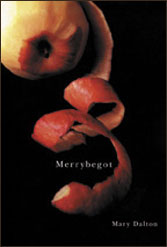
A variation of the above appears in the poem Berry Pails by Mary Dalton in Merrybegot, a collection of poems by Mary Dalton, the audiobook edition of which was narrated by Anita Best with Patrick Boyle on trumpet and flugelhorn, published by Rattling Books .

Berry Pails

Gadabouts, those young ladyios -
The house in slings and
The whole works of them
Are gone in back, in on the Runs -
All the way in to Skibbereen.
I'll guarantee they'd better
Marley back here with berry pails
Blue to the brim - else
There won't be a pick in the house
This night of Our Lord
And what they'll be after filling up on
Is a feed of tongues.

Wednesday, December 27, 2017

From the Dictionary of Newfoundland English: janny and janny-talk

From the Dictionary of Newfoundland English:

janny n, usu pl also janney, jenny, johnny [phonetics unavailable]. Cp OED johnny 1 'a fellow, chap'; EDD john 2 (6 a) 'the mummers used to be called John Jacks' (1875-) W; O Sup2 janney Nfld (1896-).
1 Elaborately costumed person who participates in various group activities at Christmas; FOOL, MUMMER n.
1896 J A Folklore ix, 36 Old teaks and jannies, boys and men who turn out in various disguises and carry on various pranks during the Christmas holidays, which last from 25th December to Old Christmas day, 6th January. [c1900] 1978 RLS 8, p. 27 ~ a mummer. 1925 Dial Notes v, 335 Johnnies—Christmas mummers. Also jennies. 1928 Nfld Qtly Dec, p. 15 The merry party of 'Jannies,' or 'Mummers' made the welkin ring with their weird shouts and cries and their 'false faces' sent many [a] frightened child in haste to its mother's knee. 1937 DEVINE 29 ~ ies. Mummers; persons dressed in disguise at Christmas for visiting. 1957 Atlantic Advocate xlviii, 23 ... extra large kitchens that served as the stage for the 'Fools' or 'Mummers' or 'Janneys,' to give them their peculiar local names. T 45-64 You had no rhyme or nothing goin' out in these janneys. We usen't. Only get in [a house] and try and talk way they wouldn't understand you or get out and waltz or dance. T 172/3-65 Same thing, janney. Since that, we're not known as mummers today, they're janneys today. T 181-65 They have those johnnies, they calls 'em now. So many boys and girls around, but they got no recitations, see, nothing to say. 1969 Christmas Mumming in Nfld 65-6 There are 'big janneys,' adults, and 'little janneys,' children... Some are able to 'talk like a janney'—ingressive utterances at a high pitch. 1973 PINSENT 55 Apparently this janny had been making the rounds for years and not once had anyone guessed him—till this night. 1973 WIDDOWSON 424 'Now they big Janneys is comin' in! They'll take you tonight if yous don't be good!'
2 Phr go out in the jannies: to dress in the disguise and costume of a Christmas mummer; cp FOOL 2. T 45-64 Oh yes, we went out in the janneys several times down home before we left. 3 Comb janny-night: any night during Christmas season on which jannies go around visiting at people's houses. C 67-2 On janny-night they used to get dressed up and go from house to house. Would dance and get something to eat. Usually had a harmonica or a jews harp... Would go out most nights from Christmas Eve to New Year.

janny-talk: distorted or ingressive speech of a mummer used as a means of disguising one's identity. 1969 Christmas Mumming in Nfld 211 When the janneys come to a house they wish to visit, they open, without knocking, the storm-door, stick their heads inside the 'porch' and 'sing out': 'Any janneys in tonight?' in the high-pitched, squeaky voice that janneys always use—'janney-talk.' T 257-66 Oh yes, 'twas queer talk—janney talk. Some people can't talk and some of 'em can, you know. Some of them make a queer talk, draw in their voice, and make a queer sound.

A primer for listening to Merrybegot by Mary Dalton, read by Anita Best, from Rattling Books.

Tuesday, January 04, 2011

Redefining New Year's Resolutions #4: Kathleen Winter

Kathleen Winter

By every gud and bawk marling over drung, bawn and blue drop, I resolve to shive four hours off the night and keep writing long past midnight, no matter what lewerdly boo wants to whisper pishogues in my ear or pelt me with guilty waddocks, this angishore is sick of early to bed and early to rise just because she's mothered a brood of merrybegot nuzzle-tripes wailing all day long at her that they're hungry and she's supposed to find a fish in the droke and fry it up for them when what she should be doing is getting her yaffle of stories ready for the next bloody Pulitzer.

**************************

The above resolution was an entry from Kathleen Winter to our 2008 New Year's Resolution Contest which originated from the Rattling Books facebook group/game REDEFiNE iT: Dictionary of Newfoundland English.

REDEFiNE iT was a tangent indulgence of Rattling Books' which was inspired in part by Mary Dalton's collection of poems entitled Merrybegot. The unabridged audio edition is available as an audio CD or Digital Download from Rattling Books. It is performed by Anita Best with Patrick Boyle on trumpet and flugelhorn.

Monday, April 28, 2008

Mary Dalton at the Banff Centre for the Arts

Newfoundland poet Mary Dalton is currently a faculty member for the Banff Centre for the Arts' Writing Studio 2008.

To read her bio on the Banff webpage, please follow this link.

As part of her residency, Dalton will be giving a reading with novelist Alan Cumyn on May 23 at 7:30 PM in the Rolston Recital Hall. For more information, see the website.

*************

Mary Dalton is the author of four collections of poetry. Her third collection, Merrybegot, is available as an unabridged audiobook from Rattling Books. It is narrated by famed Newfoundland traditional singer Anita Best and includes trumpet and flugelhorn accompaniment by Patrick Boyle. Merrybegot was, in part, the inspiration for the REDEFiNE iT Dictionary of Newfoundland group.

Wednesday, January 02, 2008

New Year's Resolution


I resolve:

firstly: to shive all lewardly pishogues yaffled into this drung of a world by hangishores believing in boo darbies

secondly: to juggle four waddocks on the bawn and teach my merrybegot to do the same before

thirdly and lastly: I quit this droke peopled by nuzzle tripes, marl on out to the blue drop and hang with the bawks and guds.


*************************************************************


This Resolution was inspired by the Rattling Books New Year's Resolution Contest based on the Rattling Books facebook group REDEFiNE iT: Dictionary of Newfoundland English.

We invite you to post your own Resolution either here or on the REDEFiNE iT Facebook group page under the relevant Discussion Board Topic.


The REDEFiNE iT group was inspired by Merrybegot by Mary Dalton. The unabridged audio edition is performed by Anita Best and Patrick Boyle.

Tuesday, November 13, 2007

Words, Wonderful Words

Humdinger of a Project: Tracing Slang to Ireland

from The New York Times
November 8, 2007
by Corey Kilgannon

Growing up Irish in Queens and on Long Island, Daniel Cassidy was nicknamed Glom.

“I used to ask my mother, ‘Why Glom?’ and she’d say, ‘Because you’re always grabbing, always taking things,’” he said, imitating his mother’s accent and limited patience, shaped by a lifetime in Irish neighborhoods in New York City.

It was not exactly an etymological explanation, and Mr. Cassidy’s curiosity about the working-class Irish vernacular he grew up with kept growing. Some years back, leafing through a pocket Gaelic dictionary, he began looking for phonetic equivalents of the terms, which English dictionaries described as having “unknown origin.”

“Glom” seemed to come from the Irish word “glam,” meaning to grab or to snatch. He found the word “balbhán,” meaning a silent person, and he surmised that it was why his quiet grandfather was called the similarly pronounced Boliver.

He began finding one word after another that seemed to derive from the strain of Gaelic spoken in Ireland, known as Irish. The word “gimmick” seemed to come from “camag,” meaning trick or deceit, or a hook or crooked stick...

To read the rest of this article, please click here.

*************

Love words? Check out Rattling Books' Facebook group, REDEFiNE iT: Dictionary of Newfoundland English.

Thursday, July 12, 2007

Dictionary of Newfoundland English: water pups in a poem by Mary Dalton

The following entry is from the Dictionary of Newfoundland English :

water pup: blister, sore or inflammation common among fishermen, whose skin is often in contact with salt water. Possibly a playful synonym of water whelp. Also attrib.
1909 BROWNE 118 Others, with bandaged hands or arms 'in a sling' are suffering from sores, deep ugly ulcers ('water-pups') that need skilled attention. 1920 WALDO 56 So many fishermen get what are called 'water-whelps' or 'water-pups,'—pustules on the forearm due to the abrasion of the skin by more or less infected clothing. C 65-4 Water pups are a form of boil [breaking] out on arms that have been rubbed by wet clothing and salt water. C 69-2 When he was fishing he never failed to use water pup chains around the wrist. These were brass chains worn to prevent the wrist and arm from being chafed by the oil or rubber coat and causing water pups which he says could be pretty bad.


Water pups appears in "Water Pups" in Merrybegot, a collection of poems by Mary Dalton, the audio edition of which was narrated by Anita Best with Patrick Boyle on trumpet and flugelhorn; published by Rattling Books in 2005.


Water Pups

On shore, to think on the water.
Once out, windshook as a rotten pine,
To see in sleep the great water bears
And go in dread of a wild weather light,
To burn with the fire of water pups
—
Hands full right up to the elbow
—
Sometimes so big two'd go into one.
To think on the yoked goats,
The rocky paths, the tilt of
The yellowbelly, junks a-crackle in the red stove,
The missus and youngsters run down from the flake.
Out on the water, to think on the shore.

Thursday, July 05, 2007

Dictionary of Newfoundland English: drite in a poem by Mary Dalton

The following entry is from the Dictionary of Newfoundland English :

drite* n also driet, dryth [phonetics unavailable]. OED dryth now dial (1533-); EDD dryth 1 s cties. Dryness in the air, low humidity; little dampness or fog, consequently a condition suitable for drying salted cod; hence the degree of dryness of the various grades or 'culls' of fish (see 1962 quot).
1897 J A Folklore x, 205 Driet or dryth, dryness or dryingness. 'It's no use spreading out the fish, there is no driet in the weather.' 1924 ENGLAND 221-2 Such wind an' rain, me sons! Dere was no let-up, an' no driet [clearing up] in de wedder, a week on end. 1937 DEVINE 19 Driet, dryth. Drying power in the weather prevailing. 1962 Nfld Fisheries Conf 202 He don't feel like selling a draft of light cured fish say for $13.00 which is a problem which must arise owing to the drieth of the fish, there is so much moisture in the heavy cured fish. 1966 HORWOOD 266 But this early in the morning the day had almost perfect 'dryth.' P 157-73 There's no dryth for the fish today.


Drite appears in "Cullage" in Merrybegot, a collection of poems by Mary Dalton, the audio edition of which was narrated by Anita Best with Patrick Boyle on trumpet and flugelhorn; published by Rattling Books in 2005.

Cullage

Not a bit of drite.
Day after day of this mauzy old stuff
—
Now the fish is maggotty and it's slimy,
And I got to get out on the flake again
With small tubs and pickle and wash it.
And rewash it and perhaps the weather'll
Marl on like this for a fortnight,
And when 'tis all over I got nothing
—
Nothing to show but a mess of cullage.

Friday, June 22, 2007

Dictionary of Newfoundland English: Gommil

The following entry is from the Dictionary of Newfoundland English :

gommel n also gommil JOYCE 264 gommul 'simple-minded fellow'; DINNEEN gamal 'stupid looking fellow.' Epithet for a stupid person; freq with foolish, etc; GOM.
1924 ENGLAND 221 'He must of went off his 'eed. to curse on de lightnin',' put in Arthur Roberts. 'Ondly a gommel [fool] 'd take a chance like dat.' 1937 DEVINE 25 ~ A stupid or foolish person. 1968 DILLON 143 That poor gommil, sure he don't know what you're talkin' about. C 70-11 When slightly irritated with him she calls him a foolish gommil. 1975 RUSSELL 51 'Come here,' said she, 'you foolish gommil, and help me.'

Gommil appears in "The Tangler" in Merrybegot, a collection of poems by Mary Dalton, the audio edition of which was narrated by Anita Best with Patrick Boyle on trumpet and flugelhorn; published by Rattling Books in 2005.

The Tangler

From the word go it was a thankee job
—
We all knew—
But that tangler came pretty near to
Fooling up the whole works,
Blathering to this one and that one
—
The foreman had like to
Flatten him
—
A fierce little red-headed bantam,
Rearing out the big ones,
Ready to board
That tongue-flapping long-shanks,
That rawny ghost of a gommil
.

Saturday, June 09, 2007

Dictionary of Newfoundland English: devil-ma-click in a poem by Mary Dalton

The following entry is from the Dictionary of Newfoundland English :
devil n EDD ~ sb 3 (10) Ir for sense 1; for combs. in sense 3: NID devil's claw 2, cp EDD 1 (32) devil's racket 'noise or commotion,' EDD devilskin '[from] devil's kin.'
1 Phr the devil's cure to you: mild imprecation, expression of ill will or lack of sympathy[...]
2 Comb devil-ma-click: adroit, versatile worker; jack of all trades.
C 71-115 Any person who could turn his hand to a number of tasks with more or less equal success was referred to as a devil-ma-click.
Devil-ma-click appears in "First Boat" in Merrybegot, a collection of poems by Mary Dalton, the audio edition of which was narrated by Anita Best with Patrick Boyle on trumpet and flugelhorn; published by Rattling Books in 2005.

First Boat

Eyes like the cornflower. And a
Real devil-ma-click—
I knew when I married him.
First boat on the water—
"Where's that sun to,
Lollygagging about?" he'd grin
On his way out the door.
Ours the highest woodstack.
Ours the stable stuffed with hay.
Our goats the fattest.
Our quilts the most rumpled.
He'd ruffle my hair,
Grin, "Where's that sun to,
Lollygagging about?"
Our sweat on his shoulders.
His blue eyes blazing.

Sunday, December 10, 2006

Dictionary of Newfoundland English: Gud

This photograph of Razorbills was taken by Dave Fifield. If you've visited our Blog before or know anything about Rattling Books you may recognize the Razorbill as the inspiration for our logo. We knew the Razobill by it's Latin name (Alca torda) and the local term Tinker but according to the Dictionary of Newfoundland English the Rattling Books logo is also known as a Gud.

Here is the Gud entry which you can find in the online edition of the Dictionary of Newfoundland English.

gud n Northern razor-bill (Alca torda); TINKER. 1884 STEARNS 235-6 I have often seen the water covered with a clustered flock [of puffins], all engaged in making a hoarse, rasping sound, not unlike the filing of a saw; this is also done both by the 'murre,' and the 'turre,' and at such times, which ever species is present, they receive from the sailors the name of 'guds,' from a fancied resemblance to that sound.

So that's what people have been saying all this time about Rattling Books!

"Some gud logo you got there b'y."

Sunday, November 26, 2006

Dictionary of Newfoundland English : Merrybegot


The following entry is from the Dictionary of Newfoundland English and includes reference to "merrybegot":

merry a OED ~ a B adv b ~ begot (1785, 1890), EDD (2) (a); OED dancer n 5, EDD ~ a 1 (6) ~ dancers, DC (1946). Comb merry-begot, ~ me-got: bastard; MOSS CHILD. 1924 ENGLAND 183 'The merry-me-got!' exclaimed the Cap'n, wrathfully. To call a man a merry-me-got seriously reflects on the legitimacy of his entrance into this sorry world. T 222-66 This child is not simply an illegitimate child, but a 'moss child' or a 'moonlight child' or a child that is 'merry begot.' 1968 Nfld Qtly Christmas, pp. 5-6 They often lived together without benefit of clergy and children born out of wedlock were called by the delightful name of 'merrybegots.'

merry dancers, dancers: northern lights, aurora borealis (1937 DEVINE 33). C 65-2 The northern dancers or merry dancers are really going it tonight. We're going to have a nice day tomorrow. C 66-18 Extra brilliant light of the northern lights is a sign of good weather. They are called dancers in Bonavista. 1981 HUSSEY 62 The merry dancers were northern lights but they looked a bit different and were a bit more lively ... always in motion and continually dancing,

Another use of the word Merrybegot: a collection of poems by Mary Dalton, the audio edition of which was narrated by Anita Best with Patrick Boyle on trumpet and flugelhorn; published by Rattling Books in 2005.